Our advanced Acne Scar Treatment helps reduce scars and restore smooth, clear skin. Using safe and effective techniques, we target scars at the root to improve skin texture and boost your confidence.”



Our advanced Acne Scar Treatment helps reduce scars and restore smooth, clear skin. Using safe and effective techniques, we target scars at the root to improve skin texture and boost your confidence.”
Acne, medically referred to as Acne Vulgaris, is a skin condition characterized by small bumps and pustular lesions that appear on or beneath the skin’s surface. It is one of the most common skin problems in India, affecting nearly 85% of teenagers, with almost half experiencing severe forms that cause both physical discomfort and emotional stress. Acne usually begins in the early stages of puberty and is often mild, tending to fade after adolescence, but it can also appear at any stage of life and may require systematic and rational treatment for proper management.
In some individuals, acne can persist well beyond teenage years. While untreated acne may last for about five years before subsiding, many continue to struggle with breakouts into adulthood, and in some cases, even into their fifties. This prolonged nature makes timely treatment important to not only control the condition but also to minimize long-term effects on skin health and self-confidence.
In most cases, acne is not permanent and does not pose any serious health risks. With proper care and treatment, breakouts can be controlled and managed effectively.
However, when left untreated, acne may lead to lasting consequences such as scarring and skin texture changes. Since it can also cause emotional distress, timely treatment and preventive care are essential to avoid long-term damage.
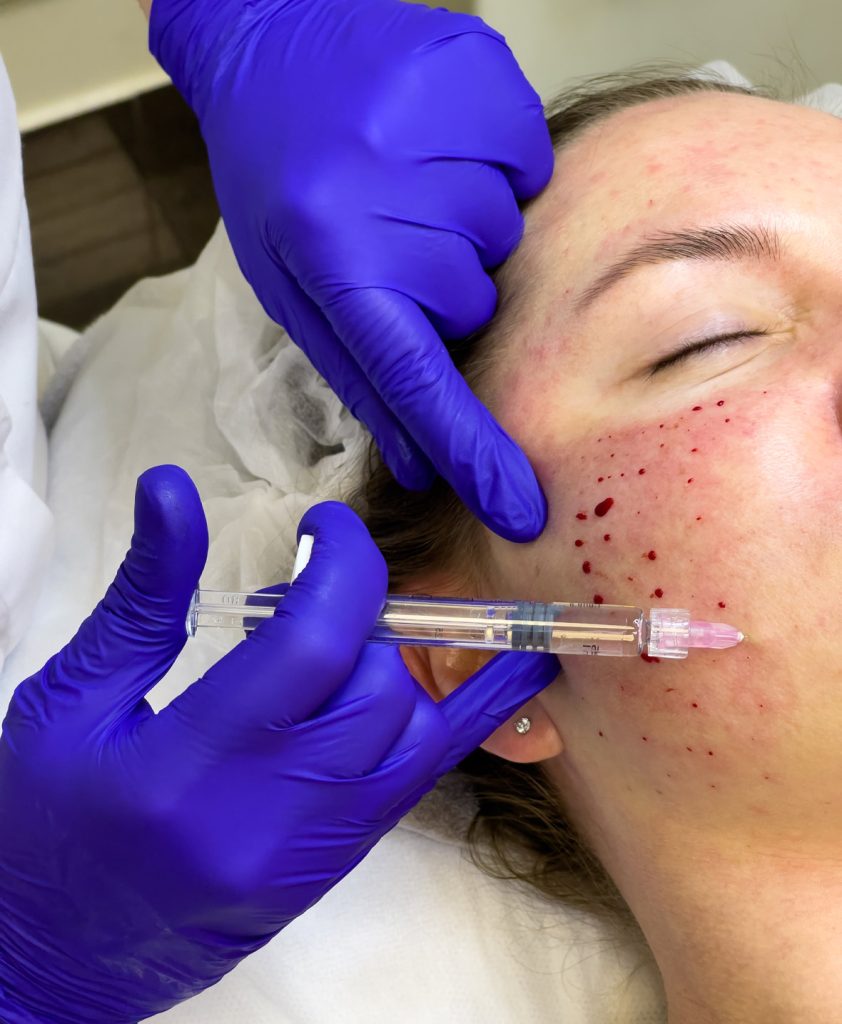
Acne is primarily triggered by fluctuations in hormone levels and disturbances in the oil (sebaceous) glands and hair follicles. It often appears as lesions on the face, neck, back, chest, and shoulders. The skin’s pores are connected to oil glands through hair follicles, and when these glands produce excess sebum (oil), the passage becomes clogged. This buildup, when mixed with dead skin cells and debris, creates an ideal environment for Propionibacterium acnes (P. acnes) bacteria to thrive, leading to inflammation and visible breakouts.
Breakouts are more common during puberty or periods of hormonal change, as oil secretion naturally increases. In some cases, underlying hormonal conditions such as Polycystic Ovarian Syndrome (PCOS) may aggravate acne. Additionally, external factors like steroid creams, heavy oils, and comedogenic cosmetic products can also contribute to its development.
Mild acne can often be self-diagnosed, but determining the severity of an outbreak requires a dermatologist’s expertise. At our clinics in Kerala and Tamil Nadu, our doctors conduct a physical examination, identify underlying causes, and assess the grade of acne. Broadly, acne is classified into two categories: non-inflammatory and inflammatory. Non-inflammatory acne includes blocked pores such as whiteheads (closed clogged pores) and blackheads.
Inflammatory acne occurs when clogged pores become infected with bacteria, leading to papules (red, tender bumps without pus) and pustules (pimples containing pus). In more severe cases, it can progress to nodules—large, painful lumps beneath the skin—or cystic lesions, which are pus-filled and often very painful. These types of acne are more likely to cause redness, swelling, and discomfort, highlighting the need for timely treatment.
Our doctors provide effective acne care with treatments that target excess oil production, bacterial infection, and skin inflammation. The choice of treatment depends on the severity and extent of the condition. By carefully classifying and diagnosing acne, our doctors can begin treatment at the earliest stage, helping to control and manage it more efficiently.
Acne management often involves medications in the form of creams, lotions, or tablets. Along with these, advanced options such as chemical peels, intralesional injections, light-based therapies, and comedone extractions are also available. The best results are usually achieved by combining different treatment methods, and regular follow-ups are essential to maintain long-term improvement.
Acne scar treatment focuses on evening out the skin texture through specialized procedures, with the number of sessions depending on the size, shape, depth, and nature of the scars. To achieve the best possible results, our doctors often combine multiple modalities. Superficial scars are effectively managed with procedures such as chemical peels, microdermabrasion, punch elevation, punch grafting, microneedling, and subcision.
For deeper scars, advanced technologies like pulsed dye laser and fractional laser treatments—performed monthly—offer excellent improvement, leaving the skin brighter and more refined. Additionally, Microneedle RF and RF subcision treatments are also highly effective for stubborn scars. These approaches are suitable for all skin types and deliver significant results with minimal adverse effects.
Acne flare-ups are influenced by a mix of lifestyle habits, hereditary tendencies, and environmental factors. While the exact cause of acne is still not fully understood, certain medical conditions and hormonal changes are known to trigger outbreaks. To minimize recurrence, lifestyle adjustments play a crucial role alongside medical care.
Simple practices such as getting at least 8 hours of sleep, eating a balanced diet, staying well-hydrated, and cleansing the face twice daily with a mild cleanser help control excess oil and maintain skin health. Regular follow-ups with your dermatologist are essential to keep acne under control, while self-medication should be avoided to prevent worsening of the condition.
